
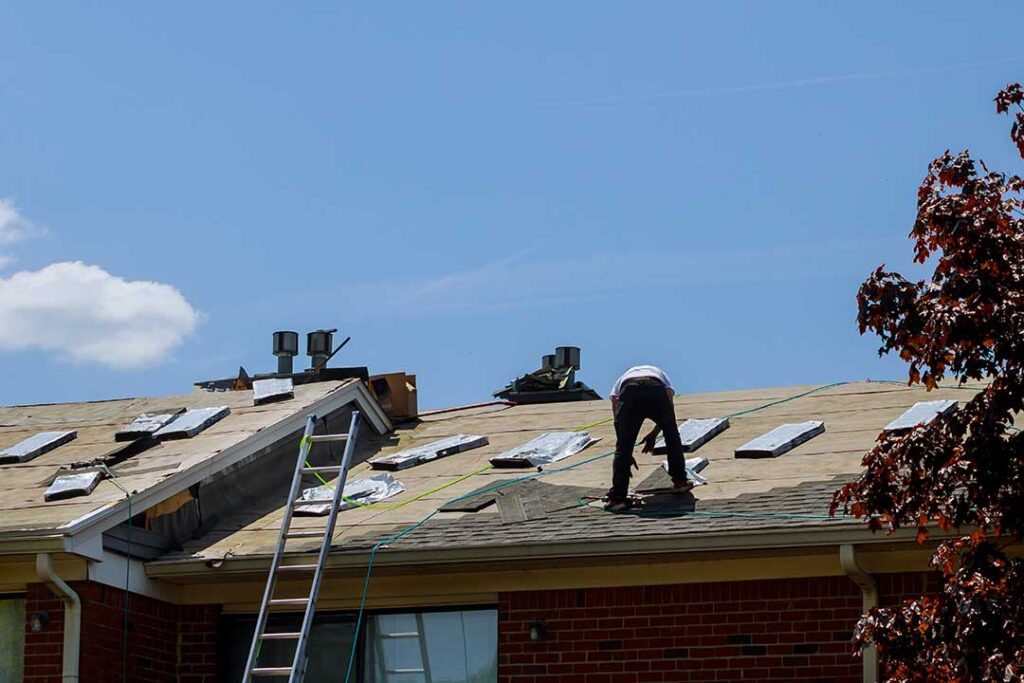
Cleaning a roof safely starts with recognizing that a roof is not a normal walking surface. Shingles can become slippery, brittle, or damaged underfoot, and a fall from even a one-story roof can cause serious injury. For many homes in Newfield, NY, the safest roof-cleaning plan is limited to ground-level inspection and gentle treatment from a ladder or roof edge—if the work can be done without climbing onto the roof.
What should be removed from a roof?
Roof cleaning usually involves removing leaves, small branches, dirt, moss, algae, and lichen. Each material behaves differently.
- Leaves and twigs can hold moisture against shingles and clog valleys or gutters.
- Algae may appear as dark streaks or broad stains, especially on roof areas that stay damp or receive limited sunlight.
- Moss forms a raised, green layer that can lift shingle edges as it grows.
- Lichen attaches more firmly and may be harder to remove without damaging the roofing surface.
- Ice, snow, and heavy debris should not be treated as ordinary cleaning problems because removal can create structural or fall hazards.
A small amount of discoloration does not always mean the roof is failing. However, widespread moss, missing shingles, exposed underlayment, sagging areas, or repeated dampness deserve closer attention.
Is it safe to walk on a roof?
For most homeowners, walking on a roof is not the safest cleaning method. Asphalt shingles become especially slick when wet, and granules can loosen under boots. Older shingles may crack when stepped on, while metal roofing can be dangerously slippery even when it appears dry.
Avoid walking on a roof if:
- The surface is wet, icy, frosted, or covered with dew.
- The roof is steep, high, fragile, or visibly deteriorated.
- Moss or algae makes the surface slick.
- There are power lines, nearby tree limbs, or unstable ladder conditions.
- You do not have fall-protection equipment and training.
- You have health, balance, or mobility concerns.
A roof that looks easy to reach from a porch or low addition may still have hidden hazards. Valleys, skylights, soft decking, and weak gutter edges can fail under weight.
How can leaves and loose debris be removed safely?
Loose debris can often be removed from the ground using a roof rake, soft-bristled extension brush, or leaf blower designed for controlled use. Work from the edge of the roof rather than pulling debris toward yourself from above.
Use these precautions:
1. Check the area below for people, pets, vehicles, windows, and outdoor equipment.
2. Stand on stable, level ground whenever possible.
3. Keep the tool at a low angle so it does not scrape across the shingles.
4. Pull or blow debris downward and away from the roof surface.
5. Do not use force around vents, flashing, skylights, or pipe boots.
6. Clear gutters separately rather than dragging large piles of debris across the roof.
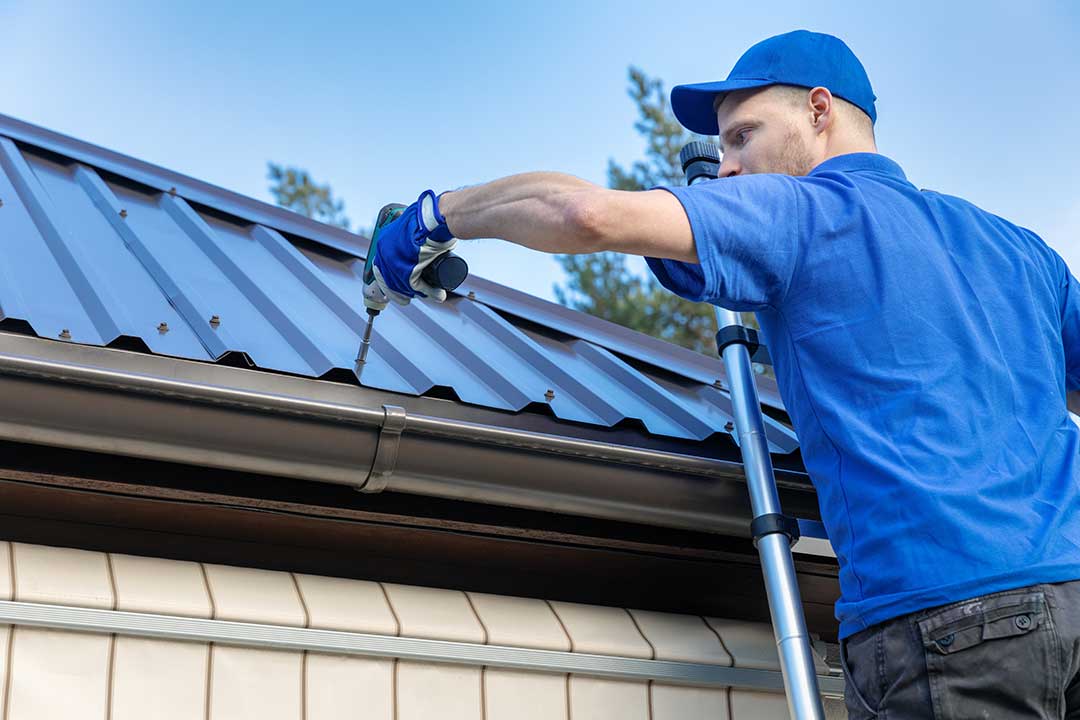
A ladder may be necessary for gutter work, but it should rest on firm, level ground and extend above the landing area. Keep both hands available when climbing, and avoid reaching sideways. Wet leaves, muddy soil, and uneven ground are common ladder hazards during the damp portions of the year.
What is the safest way to clean algae or moss?
Algae and light surface growth can sometimes be treated with a roof-safe cleaning solution applied from a safe position. The solution should be labeled for the specific roofing material and used exactly as directed.
Do not use a pressure washer. High-pressure water can strip protective granules, force water beneath shingles, damage flashing, and shorten the roof’s service life. A stiff brush can cause similar damage by removing the shingle surface.
For asphalt shingles, a gentle approach generally means:
- Apply a suitable cleaning solution without scrubbing aggressively.
- Allow the product to work for the recommended time.
- Rinse gently with low-pressure water, if the instructions call for rinsing.
- Direct runoff away from gardens, ponds, pets, and storm drains.
- Avoid cleaning in strong wind or during freezing conditions.
Moss should not be ripped off while it is firmly attached. Pulling can remove granules and lift shingle edges. Once the growth has been treated and weakened, some of it may wash away gradually during rain. Remaining material can be removed carefully only if it can be reached without unsafe roof access.
Can household bleach be used on shingles?
Some roof-cleaning methods use diluted bleach, but household bleach is not automatically safe for every roof, plant, surface, or drainage system. Strong mixtures can damage landscaping, corrode metal, discolor siding, and irritate skin, eyes, and lungs.
If a product containing bleach is used, read the label first and protect nearby vegetation with clean water before and after treatment when appropriate. Never mix bleach with ammonia, acids, or other cleaners. Dangerous gases can form.
A small test area is useful for checking whether a cleaning solution affects the roof color or nearby materials. Test on an inconspicuous section and wait long enough to observe the result before treating a larger area.
How should roof cleaning be timed in Newfield?
Milder, dry weather is generally safer for roof maintenance than freezing conditions or periods of heavy rain. In Newfield, seasonal moisture, snow, and freeze-thaw cycles can leave roof surfaces damp and make moss more persistent in shaded areas.
Choose a day when:
- The roof and ground are dry.
- Wind is light.
- Temperatures will remain above freezing during the work and drying period.
- Rain is not expected immediately after treatment.
- Sun exposure will not cause a cleaning solution to dry too quickly.
Avoid roof work during snowmelt, icy mornings, thunderstorms, or periods of strong wind. Early spring can reveal branches and debris left by winter, but it may also bring soft ground and slippery surfaces. Autumn cleaning should be done before leaves accumulate heavily in valleys and gutters, while taking care not to climb onto a wet roof.
What should never be sprayed or scrubbed?
Several common cleaning methods can cause more harm than the original staining:
- Pressure washing
- Abrasive brushes
- Metal tools or shovels
- Strong solvents
- Unlabeled chemical mixtures
- Hot water on cold roofing
- Cleaning solutions sprayed toward neighbors’ property or public areas
- Walking directly on fragile, moss-covered, or damaged shingles
Do not cover a moss problem with new granules, paint, or sealant. Those approaches hide the growth temporarily without addressing the moisture conditions that support it.
When is roof cleaning no longer a do-it-yourself task?
Stop and avoid climbing if the roof has cracked or missing shingles, exposed wood, sagging decking, loose flashing, damaged gutters, or extensive moss. A roof with structural damage can be unsafe even before cleaning begins.
Professional evaluation is warranted when access requires steep-roof climbing, fall protection, special equipment, or chemical handling near difficult drainage conditions. The same applies when the roof is older and its surface is already losing granules. Cleaning should not turn a manageable maintenance issue into a leak or injury.
After loose debris and growth are addressed, inspect the attic or upper ceilings for damp insulation, water stains, musty odors, or daylight visible around roof penetrations. These signs suggest that the roof needs more than surface cleaning.
