
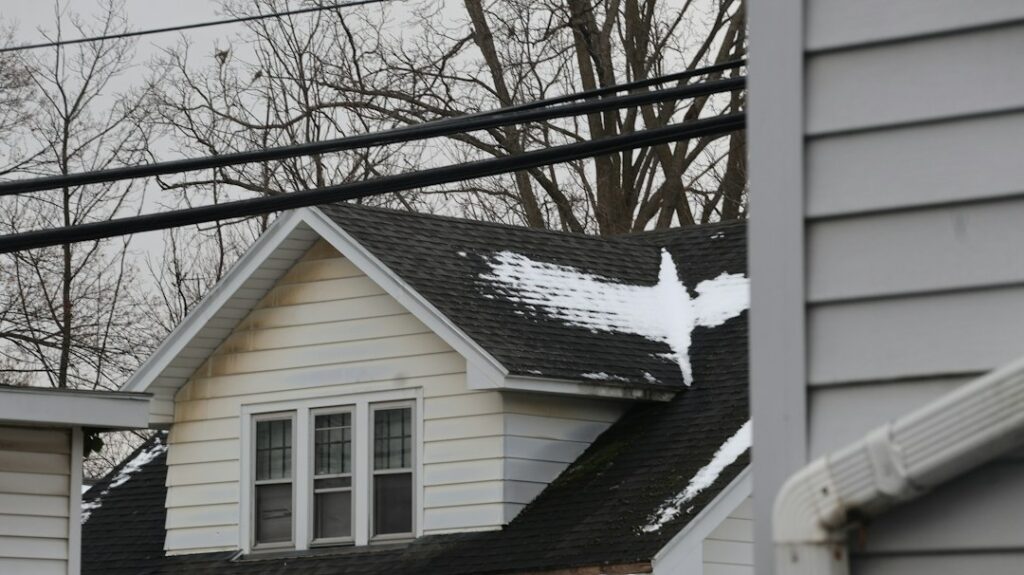
Roofing materials do not perform the same way, and the lowest upfront price is not always the lowest long-term cost. For homes in Newfield, NY, the useful comparison includes snow, ice, freeze-thaw cycles, summer heat, roof slope, structural strength, maintenance needs, and how long the household expects to remain in the home.
Which roofing material is most common for local homes?
Asphalt shingles are the most common choice for many residential roofs because they balance cost, appearance, availability, and installation practicality. Metal roofing, wood products, synthetic shingles, and natural slate can also be suitable, but each brings different requirements and tradeoffs.
A roof is more than the visible covering. Underlayment, flashing, ventilation, insulation, roof decking, and drainage details all affect performance. In a snowy, cold-weather setting, the quality of the entire roof assembly matters as much as the surface material.
What are the pros and cons of asphalt shingles?
Asphalt shingles are usually the most budget-friendly option for a complete roof replacement and are available in many colors and profiles.
Advantages include:
- Lower initial cost than most premium materials
- Straightforward repair and replacement
- Moderate weight that works with many existing residential structures
- Wide availability in traditional and architectural styles
- Easier matching when only part of a roof needs repair
Architectural asphalt shingles are thicker and more dimensional than basic three-tab shingles. They generally offer a more substantial appearance and may provide better resistance to wind and weathering, depending on the product.
Limitations include:
- A shorter service life than quality metal, slate, or some synthetic materials
- Granule loss and brittleness as shingles age
- Vulnerability to wind damage if fasteners, alignment, or sealing are poor
- Potential for premature wear from inadequate attic ventilation
- Greater exposure to ice-dam problems when insulation and air sealing are inadequate
Asphalt shingles can work well in the local climate, but they should not be viewed as maintenance-free. Missing tabs, exposed fasteners, curled edges, and dark streaks deserve attention before water reaches the roof deck.
Is metal roofing a good choice for cold and snowy conditions?
Metal roofing can be a strong option for homes exposed to repeated snow, ice, and changing temperatures. Properly installed panels or metal shingles shed water efficiently and can last substantially longer than common asphalt products.
Advantages include:
- Long service life when the material and fasteners are appropriate
- Resistance to rot, insect damage, and many forms of moisture deterioration
- Lower weight than slate or concrete tile
- Good performance on steep roofs
- Ability to shed snow readily on some roof designs
Metal roofs also come in different forms. Standing-seam panels have concealed fasteners and long, continuous seams. Exposed-fastener panels may cost less but require closer attention to fastener washers, movement, and future maintenance.
Potential drawbacks include:
- Higher initial cost than asphalt shingles
- Snow sliding suddenly from steep roof sections
- Noise from rain or hail if the assembly lacks adequate insulation or solid sheathing
- Expansion and contraction that can stress poorly detailed connections
- More difficult repairs when panels, trim, or colors are no longer readily available
Snow guards may be appropriate above walkways, entrances, or lower roofs. They do not eliminate snow loads, but they can reduce the risk of large sheets of snow sliding off at once.
What should homeowners know about wood shingles and shakes?
Wood roofing offers a natural appearance that suits some older, rural, or traditionally styled homes. Shingles are usually sawn more uniformly, while shakes have a rougher, more varied surface.
The main benefits are visual character, potential repairability, and the use of a renewable material when responsibly sourced. Wood can also weather attractively when properly designed and maintained.

The disadvantages are significant in a wet, freezing climate. Wood roofing requires ventilation and sufficient spacing to dry after rain or snow. Persistent shade, leaf debris, moss, and trapped moisture can shorten its service life. Fire resistance, local code requirements, treatment, and the condition of the underlying roof must also be considered.
Wood roofing is not a set-it-and-forget-it choice. It needs periodic inspection, especially around valleys, chimneys, roof edges, and areas beneath overhanging trees.
Are slate and synthetic slate worth considering?
Natural slate can last for many decades and sometimes for more than a century when the roof structure, fasteners, flashing, and installation are appropriate. It resists rot, insects, and ordinary weathering, and it provides a distinctive appearance.
Its biggest disadvantage is weight. A structure designed for asphalt shingles may not be suitable for slate without additional engineering or structural work. Slate is also brittle; walking on it carelessly or allowing impact damage can break individual pieces. Repairs require compatible slate, specialized knowledge, and careful handling.
Synthetic slate and composite shingles imitate the appearance of slate or wood at a lower weight. They may be easier to install on ordinary residential structures, but their performance varies by product. Color fading, brittleness, expansion, and long-term repair compatibility should be considered. Product documentation should explain allowable roof slope, fastening, fire rating, wind rating, and cold-weather performance.
What about clay or concrete tile?
Tile roofing can provide long service life and strong resistance to rot and insects. Clay tile has a traditional appearance, while concrete tile offers a wider range of shapes and colors.
The primary concern for many existing homes is weight. Tile may require stronger framing than an asphalt roof. Individual tiles can also crack from impact or improper foot traffic, and snow or ice can expose weak flashing details if installation is not carefully planned.
Tile is more common on certain architectural styles than on ordinary steep-slope homes in the area. It should be evaluated as a complete structural and water-management system rather than selected only for appearance.
Does the roof shape matter more than the material?
Roof design can determine whether a material performs well. Valleys, dormers, wall intersections, skylights, chimneys, and low-slope sections are frequent trouble spots because they concentrate water and ice.
A steep roof may shed snow more readily, while a lower-slope roof can hold snow longer and require materials approved for that slope. Complex roofs have more seams and transitions, so flashing quality becomes especially important.
New York residential requirements address roof coverings, underlayment, roof slope, and ice barriers. In areas with a history of ice forming along eaves, an ice barrier is generally required for several common roof-covering types. The exact installation must follow the applicable code and the material manufacturer’s instructions.
How should residents compare roofing materials?
A practical comparison should include more than the price per bundle or panel. Consider:
- Expected service life under local weather conditions
- Roof slope and shape
- Weight and structural capacity
- Resistance to wind, impact, moisture, and fire
- Availability of replacement materials in the future
- Ease and cost of repairs
- Snow-shedding behavior near doors, porches, and walkways
- Ventilation, insulation, and ice-dam protection
- Disposal and environmental impacts at the end of the roof’s life
No material is automatically best for every home. Asphalt is often the simplest and most economical choice. Metal may appeal to households prioritizing durability and snow performance. Wood, slate, tile, and synthetic products can make sense when appearance, historic character, or long service life justifies their added requirements.
The most reliable decision matches the material to the structure, roof design, maintenance expectations, and winter exposure—not to a product label or a promised lifespan alone.
